
Broken Spring Repair in Springfield, IL
A broken spring can make a garage door too heavy and dangerous to lift by hand within seconds. We diagnose which spring failed and why, then replace it safely with upfront, honest pricing before any work begins.
- Locally owned since 2013
- Insured, background-checked techs
- Free upfront quotes
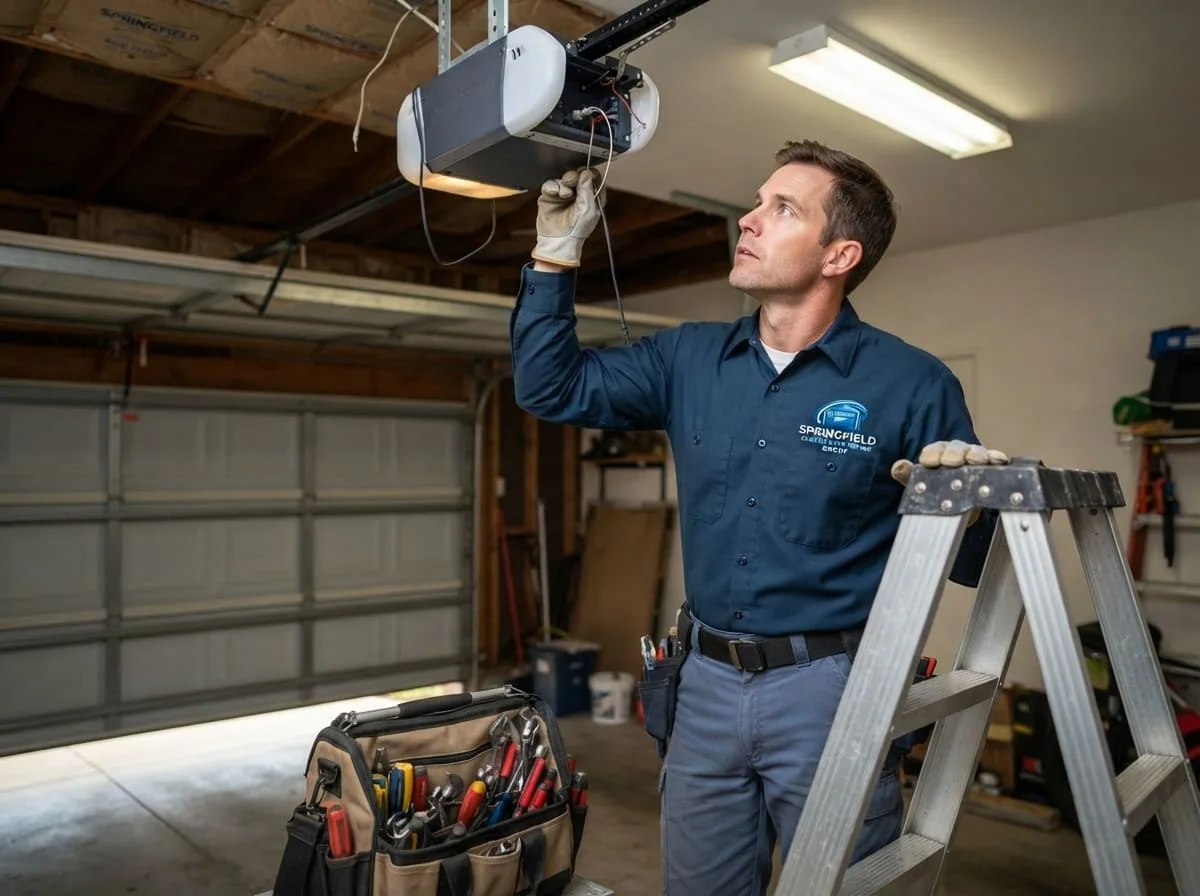
Most garage doors built in the last few decades rely on torsion springs mounted on a shaft above the opening, wound tight enough to counterbalance a door that can weigh well over a hundred pounds. When a torsion spring reaches the end of its cycle life, or a cold snap makes the wound steel more brittle, it can let go with a loud bang that homeowners on Springfield's near north side sometimes mistake for a car backfiring on Enos Ave. Older doors, and some detached garages around Springfield, still use a pair of stretched extension springs above the horizontal tracks instead, which fail differently and carry their own safety considerations.
Springfield's winters play a direct role in spring failure. Cold steel contracts, which increases tension on an already-wound torsion spring and makes a fatigued spring more likely to snap during a January cold snap than in July. Springs are rated for a certain number of open-close cycles, and once a spring nears the end of that rating, temperature swings, rust, and lack of lubrication all speed up the final break. A spring that's simply worn out will eventually fail in any climate, but central Illinois winters tend to accelerate the timeline.
Springfield Garage Door Repair Group has been diagnosing and replacing broken springs throughout Springfield and the surrounding Sangamon County suburbs since 2013. Owner Grant Callahan spent years maintaining heavier-cycle overhead doors on state government buildings before founding the company, and he still insists on explaining what actually failed and why before quoting the fix, rather than replacing parts a homeowner doesn't need.
Signs Your Garage Door Spring Is Broken
A fully broken torsion spring is usually obvious: the opener strains, the door barely lifts a few inches, or it won't budge at all, and you may see a visible gap in the coil above the door. But springs also fail gradually, and catching the warning signs early can prevent a stuck door at an inconvenient time.
- The door feels noticeably heavier than usual when lifted by hand with the opener disconnected
- A loud bang from the garage, often mistaken for something falling or a vehicle noise outside
- The door opens partway, then reverses or stalls
- One side of the door looks higher than the other when opening or closing
- Visible gap or separation in the coils of a torsion spring above the door
- Frayed, stretched, or sagging extension springs above the horizontal tracks
If the opener is straining against a door it can no longer counterbalance, continuing to run it can damage the opener's gears in addition to leaving a heavy, unbalanced door.
How Spring Replacement Works
Torsion and extension springs are rated for a set number of open-close cycles, referenced in industry standards like ANSI/DASMA 102, and a spring nearing or past its rated cycle life is far more likely to snap without warning. A technician identifies the spring type, wire gauge, and winding direction, then winds a replacement to the correct tension for that specific door's weight and track configuration.
Because torsion springs on most residential doors are sold and wound in pairs, and one spring failing under load is a sign the other is at a similar point in its cycle life, we walk through whether replacing one or both makes sense for the specific door rather than defaulting to either answer.
Why DIY Spring Replacement Is Dangerous
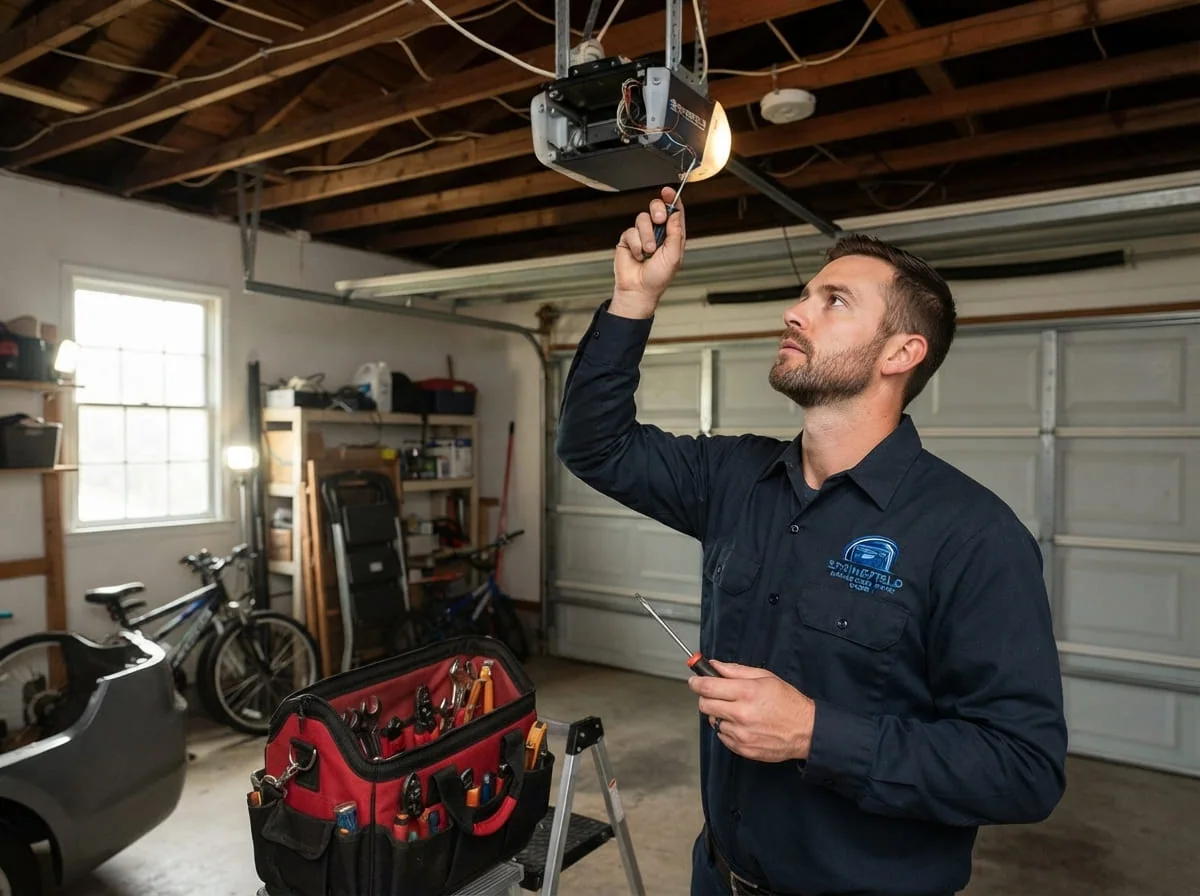
A wound torsion spring stores enough energy to cause serious injury if it releases unexpectedly, and the winding bars and clamps used to safely load or unload that tension require both the right tools and practiced technique. Extension springs carry a different but related risk: without a safety containment cable running through the spring, a snapped extension spring can become a projectile, which is why the U.S. Consumer Product Safety Commission has published guidance on extension spring safety cables for exactly this reason.
Beyond the spring itself, a door with a failed spring is effectively unsupported dead weight. Working underneath it, or trying to force it open or closed, risks the door dropping suddenly. This is one repair where the safety margin between doing it right and doing it wrong is genuinely narrow.
What Affects a Spring Repair Call
Every service call starts with an on-site inspection rather than a phone quote, because several factors change what the repair actually involves.
- Whether the door uses torsion springs, extension springs, or both
- The door's weight and size, including double-wide doors that require higher-tension springs
- Whether one spring failed or both are near the end of their cycle life
- Rust or corrosion on the shaft, cables, or hardware connected to the spring system
- Whether the failure has caused secondary wear on cables, rollers, or the opener
We provide a free, upfront quote once we've actually looked at the door, rather than guessing a number over the phone before knowing what's involved.
Why Springfield Homeowners Choose Springfield Garage Door Repair Group
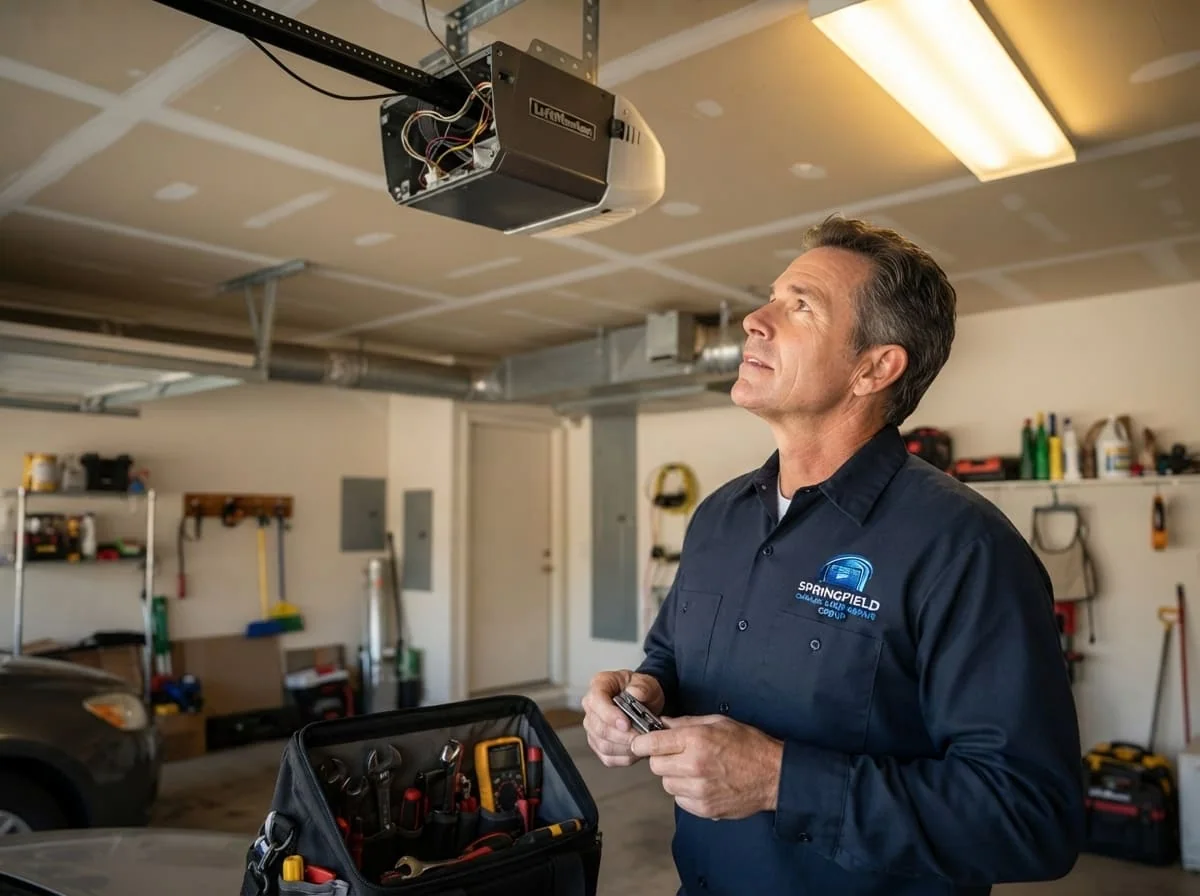
Grant Callahan founded this company in 2013 after a decade spent maintaining overhead doors on state government buildings around the Capitol complex, where the doors and hardware saw far more cycles than a typical residential garage door ever will. That background is why the company treats a straightforward residential spring replacement with the same care as heavier-duty equipment: diagnose the actual failure, explain the mechanism to the homeowner, and quote honestly before starting work.
The company is locally owned and operated, with insured, background-checked technicians and same-day appointments where possible, including for Springfield neighborhoods like Enos Park as well as surrounding suburbs.
What to Expect When You Call
Call and describe the problem
Tell us what you're seeing or hearing so we can schedule the right technician and bring the correct spring stock for your door.
On-site inspection
The technician identifies the spring type, size, and winding direction, and checks cables, rollers, and the opener for related wear.
Free upfront quote
You get a clear, honest quote for the specific repair needed before any work begins.
Safe spring replacement
The technician winds and installs the correct replacement spring using proper winding bars and safety procedure.
Balance test and walkthrough
The door is tested for balance and smooth operation, and the technician explains what failed and why.
Broken Spring Repair in Springfield, IL FAQs
How much does garage door spring repair cost?
Cost depends on whether one or both springs need replacing, the spring type and size, and whether related hardware like cables or rollers was damaged when the spring broke. Springfield Garage Door Repair Group provides a free, upfront quote after inspecting the door, before any work begins.
Can I replace a garage door spring myself?
It isn't recommended. A wound torsion spring stores enough energy to cause serious injury, and the winding bars and technique required are specialized. Extension springs carry a related risk if they lack a proper safety containment cable.
How long does spring replacement take?
Most spring replacements are completed in a single visit once the technician has inspected the door and confirmed what's needed, though timing can vary if related hardware also needs attention.
Should I replace one spring or both?
If your door uses a pair of torsion springs, the spring that didn't break has typically gone through a similar number of cycles as the one that did. We'll walk through the specific tradeoffs for your door before you decide.
How do I know if it's the spring and not something else?
A door that suddenly feels much heavier, won't lift more than a few inches, or produced a loud bang beforehand usually points to a broken spring. A visible gap in a torsion spring's coil or a stretched, sagging extension spring confirms it.
Is a broken spring an emergency?
It's not a fire-department emergency, but it does mean the door is unsafe to force open or closed and the opener shouldn't be run against it. Call anytime; we return after-hours calls first thing and offer same-day appointments where possible.
How long do garage door springs typically last?
Springs are rated for a set number of open-close cycles rather than a fixed number of years, so a door used often will reach the end of its spring's rated life sooner than one used rarely. Cold weather and rust can also cause a fatigued spring to fail sooner than it otherwise would.
Need Broken Spring Repair in Springfield, IL?
Springfield Garage Door Repair Group is ready to help — call now for a free, upfront quote.