
Off-Track Garage Door Repair in Springfield, IL
A garage door hanging crooked in its tracks is under real tension and shouldn't be forced back by hand. We diagnose the cause and safely realign or replace the damaged hardware so the door runs true again.
- Locally owned since 2013
- Insured, background-checked techs
- Free upfront quotes
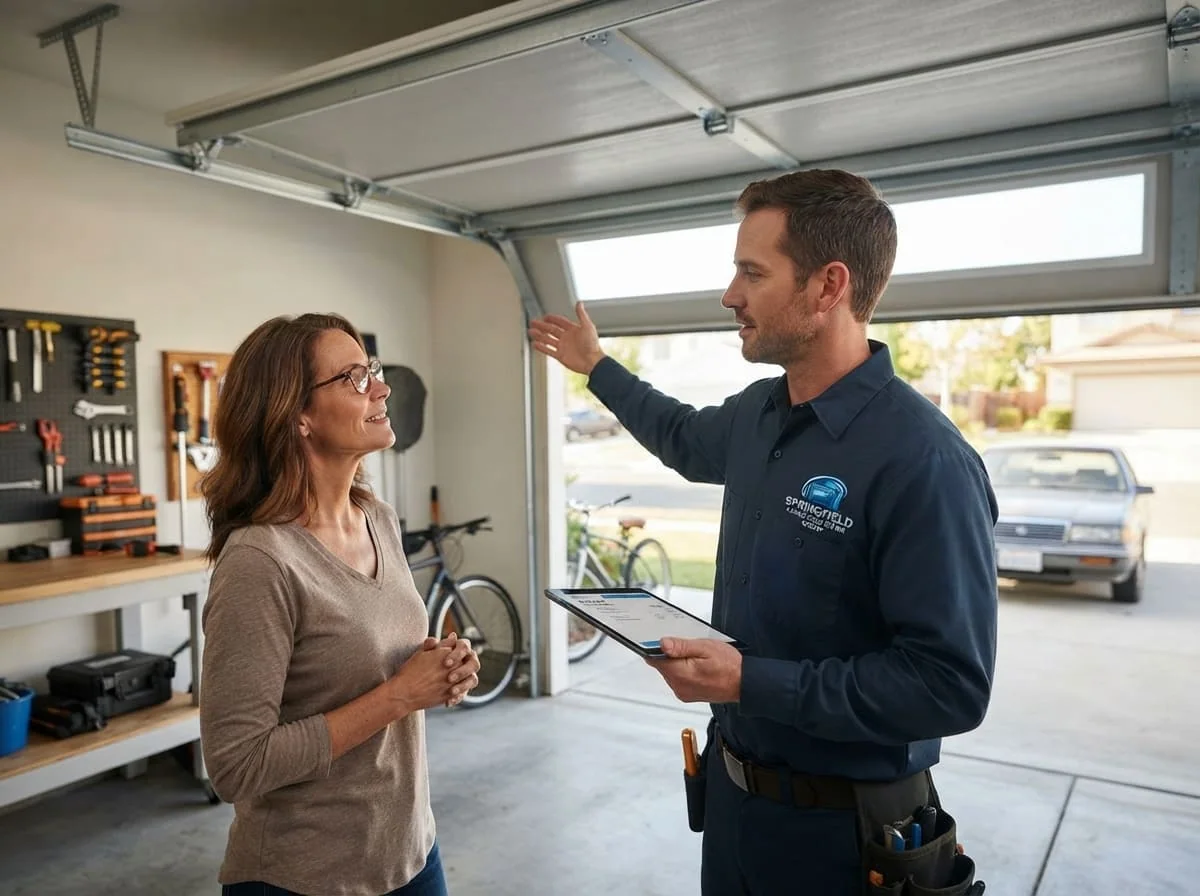
An off-track garage door is exactly what it sounds like: one or more of the rollers that ride inside the vertical or horizontal track sections have jumped the channel, so the door is no longer hanging square. Sometimes it's obvious — the door sits crooked, gapped away from the frame on one side, or stopped moving mid-cycle. Other times only a technician checking the roller-to-track fit will catch it before it becomes a bigger problem.
Most off-track calls in Springfield trace back to one of a few causes: a roller that's worn down or cracked and can no longer hold the track channel, a track panel that's been bent or knocked out of alignment, a cable that slipped off its drum and let one side of the door drop unevenly, or a direct impact — a car bumper, a stray basketball, a ladder leaned against the door. Any of these can pull a section of the door out of true, and a door that's off track is still under spring tension even though it isn't moving correctly.
Springfield's winters add another variable. Once temperatures drop into the 20s and 30s, nylon rollers get brittle and are more likely to crack or shatter under normal cycling, and steel track can contract just enough to bind a roller that was already borderline. We see a real uptick in off-track calls in the coldest stretches of the year for that reason. Springfield Garage Door Repair Group has been diagnosing this kind of hardware failure since 2013, and we explain what actually went wrong before we quote anything — no guessing, no upsell.
Signs Your Garage Door Has Come Off Track
Some signs are unmistakable: the door hangs at a visible angle, one bottom corner sits noticeably higher or lower than the other, or the door simply stops partway through its cycle and won't go further in either direction. Others are more subtle.
- A gap opens up between the door and the track on one side
- Grinding, popping, or a metallic scraping sound as the door moves
- The opener strains or reverses instead of completing the cycle
- A roller visibly sitting outside the track channel rather than inside it
- The door appears to wobble or flex more than usual as it travels
If you notice any of these, stop operating the door with the opener and call for a diagnosis rather than trying to work the door back into place.
What Actually Causes a Door to Jump the Track
A handful of failure points account for most off-track calls we run. Worn or cracked rollers are the most common — nylon rollers wear down over years of cycling and eventually can't keep their footing in the channel. A bent track section, often from an impact or from something stored too close to the door catching a moving panel, changes the geometry the rollers are riding in enough to pop them loose.
Broken or frayed lift cables are another frequent cause. When a cable snaps or slips off its drum, one side of the door loses support faster than the other, twisting the section and pulling rollers out of the track as it drops. A hinge that's cracked or missing a bolt can let a panel shift out of plane the same way. And straightforward impact — a vehicle, a delivery cart, storm debris — can knock a track section out of alignment in a single event.
Why This Isn't a DIY Fix
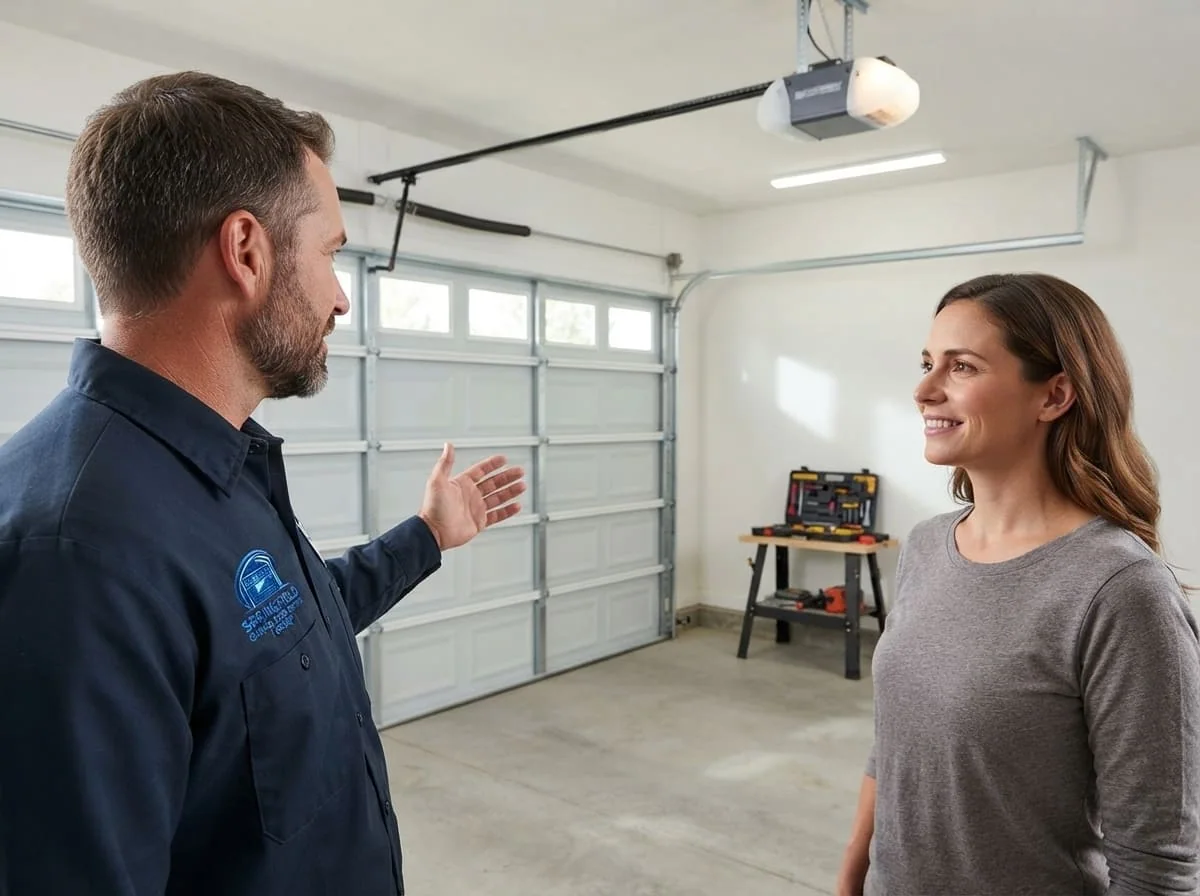
An off-track garage door is still connected to a torsion or extension spring system storing a significant amount of energy, even when the door itself isn't moving. Torsion springs mounted above the door and extension springs running along the horizontal track are wound or stretched under load specifically to counterbalance the door's weight, and that tension doesn't release just because a roller has left the channel.
Trying to force a door back into its track, or cutting a cable to "free" a stuck panel, can release that stored tension suddenly. The Consumer Product Safety Commission has documented serious injuries tied to garage door spring and cable systems, which is why extension spring setups are required to run with containment cables in the first place. This is a job for someone who deals with loaded spring systems routinely, not a weekend project.
How Springfield Winters Affect Track and Roller Hardware
Central Illinois winters put real stress on garage door hardware. Springfield's January average high sits near 33°F with lows around 18°F, and at those temperatures nylon rollers lose flexibility and become more prone to cracking under normal use. Steel tracks contract slightly in the cold, which can be enough to bind a roller that was already worn or slightly misaligned during the warmer months.
We also see more off-track calls after the first hard freeze of the season, when hardware that had been quietly wearing all year finally fails. Keeping tracks clear of ice buildup and having rollers checked before the coldest stretch of winter can catch a failing roller before it jumps the channel.
How We Fix an Off-Track Garage Door
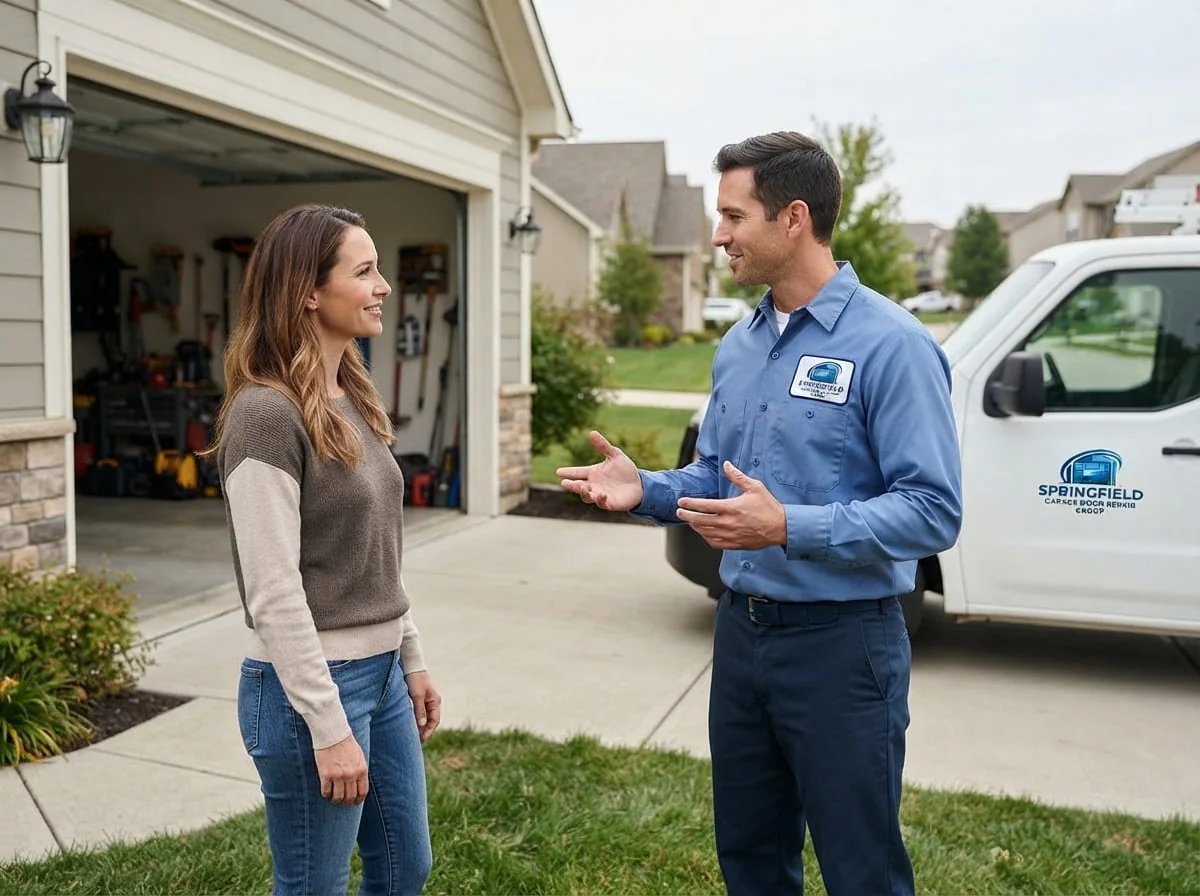
We start by getting the door safely secured so it can't shift further, then check the spring system's tension before touching anything else. From there we inspect every roller, hinge, and track section to find the specific point of failure rather than assuming it's the obvious one.
Depending on what we find, the fix might be as simple as re-seating rollers that are still in good condition, or it might mean replacing worn rollers, straightening or replacing a bent track section, or reattaching a slipped cable. We test the door through several full cycles before we consider the job done, checking that it travels straight and that the opener's force and travel settings are still accurate.
Why Springfield Homeowners Call Us for Track and Roller Problems
Owner Grant Callahan spent a decade maintaining large overhead doors on state government buildings around the Capitol complex before founding Springfield Garage Door Repair Group in 2013 — loading dock doors and motor pool garages that see far heavier daily use than a typical residential door, and track and roller failures were a routine part of that work. That background carries over directly to diagnosing why a residential door jumped its track.
We're locally owned and operated, our technicians are insured and background-checked, and we give upfront, honest pricing with a free quote before any work begins. Same-day appointments are available where possible, because a door stuck off track is usually a door you can't safely leave open or closed for long.
What to Expect When You Call
Call and describe the problem
Tell us what you're seeing — a crooked door, a gap at the track, a sound — so we can prepare the right parts for the visit.
On-site safety check
The technician secures the door and checks spring tension before doing anything else, since the door can still be under load even off track.
Full hardware inspection
We check every roller, hinge, cable, and section of track to identify the actual point of failure rather than guessing.
Realign, repair, or replace
Depending on what's damaged, we re-seat rollers, straighten or swap out track sections, or reattach cables as needed.
Full-cycle test and walkthrough
We run the door through multiple complete cycles and explain what failed and why before we leave.
Off-Track Garage Door Repair in Springfield, IL FAQs
Can I push my garage door back onto the track myself?
It's not a good idea. Even when the door isn't moving, the spring system is often still under tension, and forcing rollers back into a track can cause the door to shift or drop unexpectedly. Call for a technician to secure the door safely first.
How much does off-track garage door repair cost?
It depends on what's actually damaged — a bent roller is a different repair than a bent track section or a snapped cable. Springfield Garage Door Repair Group provides a free, upfront quote after inspecting the door, so you know the cost before any work starts.
What usually causes a garage door to come off track?
The most common causes are worn or cracked rollers, a bent track section from impact or stored items, a broken or slipped lift cable, or damage from something hitting the door directly.
Is it safe to leave a garage door off track overnight?
An off-track door often can't be fully closed or secured, which is a security and weather concern, and the door may still be under spring tension. It's best to have it looked at as soon as possible rather than leaving it as-is.
Can I still open or close my garage door if it's off track?
You shouldn't try. Running the opener or forcing the door manually once it's off track can bend the track further or cause the door to fall. Leave it in place and call for service.
How long does it take to fix an off-track garage door?
Many off-track repairs are completed in a single visit once the technician identifies the cause, though a repair involving a full track replacement or multiple damaged panels can take longer.
Will my homeowner's insurance cover an off-track door caused by a car or storm damage?
That depends on your specific policy, so it's worth a call to your insurer to ask. We can provide a written inspection and repair estimate that you can submit with a claim.
Need Off-Track Garage Doors in Springfield, IL?
Springfield Garage Door Repair Group is ready to help — call now for a free, upfront quote.