
Noisy Garage Door Repair in Springfield, IL
A noisy garage door usually means one specific part is wearing out, not just old age catching up with it. We track down the exact cause and fix it, so your door runs quiet again.
- Locally owned since 2013
- Insured, background-checked techs
- Free upfront quotes
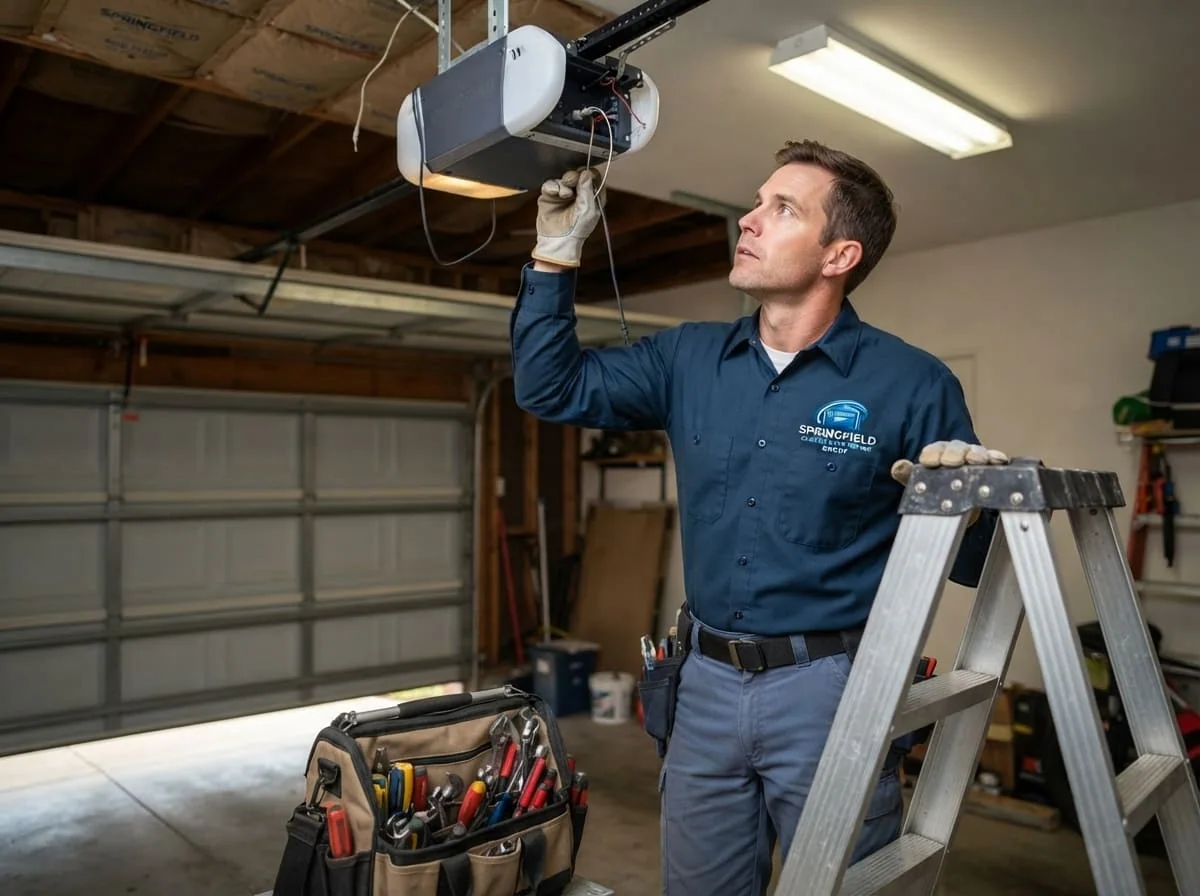
A grinding, popping, or rattling garage door is more than a bother at 6 a.m. before work or 9 p.m. after a Saturday at the Old Capitol Farmers Market. It is usually a sign that a specific part, worn rollers, loose hardware, a bent track, or aging springs, needs attention before it fails outright. Springfield Garage Door Repair Group has spent 13 years tracing garage door noise back to its actual source for homeowners across Enos Park, downtown Springfield, and the surrounding Sangamon County suburbs.
Central Illinois winters make noise problems worse. When temperatures drop, metal tracks contract slightly and can bind against rollers, standard lubricant thickens and stops cushioning moving parts, and nylon rollers that have gone brittle start to crack and clatter instead of turning smoothly. A door that was only a little noisy in October can turn into one that groans and jumps with every cycle once the first hard freeze sets in.
Owner Grant Callahan spent years diagnosing loud, heavy-cycle overhead doors on state government buildings around the Capitol complex before founding this company in 2013, and that same diagnose-first habit carries over to a squeaky residential door. Rather than guessing or swapping parts that are still good, our technicians run the door, listen and watch for where the sound originates, and explain what is actually happening before any work begins.
Common Sources of Garage Door Noise
Not all garage door noise means the same thing, and the sound itself is a useful clue.
- Metallic grinding or scraping often points to rollers with worn bearings or a track that has shifted slightly out of alignment.
- Loud banging or popping when the door opens or closes can mean loose hardware, hinges, brackets, or panel connectors, has worked itself free after years of cycling.
- A rhythmic squeak on every rotation usually traces back to dry hinges or rollers that have never been lubricated.
- A loud bang followed by the door refusing to move is a strong sign of a broken torsion spring, a separate and more urgent repair.
- A rattling chain or belt can mean the opener's drive system has developed slack or the opener itself is mounted loosely to the ceiling.
Because several of these causes can sound similar to an untrained ear, an accurate diagnosis matters more than a general fix.
How We Diagnose and Quiet a Noisy Door
Our technicians start by running the door through a full cycle while watching and listening at the track, rollers, hinges, springs, and opener, rather than assuming the loudest-sounding part is the actual problem. Vibration travels along the track and springs, so a sound that seems to come from one end of the door often originates somewhere else entirely.
Once we isolate the source, the fix is usually one of a few things: replacing worn rollers, tightening or replacing loose hardware, realigning a shifted track, lubricating the springs and hinges with the correct lubricant, or adjusting the opener's chain or belt tension. We explain what we found and what it will take to fix before any work starts.
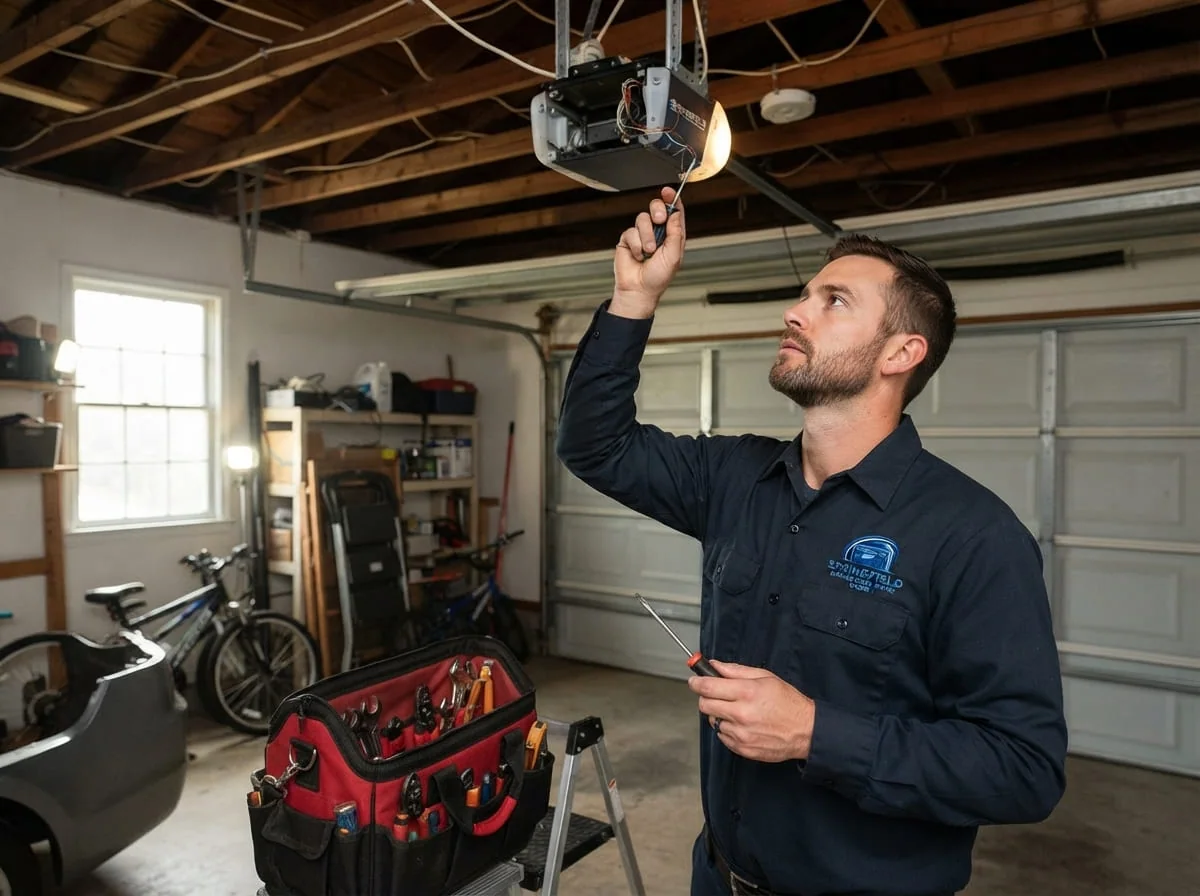
Why a Can of Spray Lubricant Doesn't Always Fix It
Homeowners often reach for a household lubricant or all-purpose spray first, and sometimes that quiets things down for a week or two. The trouble is that many all-purpose lubricants attract dust and grit, which then packs into rollers and hinges and makes the underlying wear worse over time. Spray lubricant also does nothing for a bent track, loose hardware, or a roller that has already cracked.
Working near a door under spring tension carries real risk. Torsion springs store enough energy to cause serious injury if handled without the right tools and training, which is why we recommend leaving spring-adjacent noise diagnosis to a trained technician even when the eventual fix turns out to be simple.
Springfield Winters Make Noise Problems Worse
Central Illinois winters, with January highs typically near 33°F, are hard on garage door hardware. Cold metal contracts and can bind slightly in the track, standard lubricant thickens and stops cushioning moving parts the way it should, and nylon rollers that have grown brittle with age are more likely to crack and clatter rather than turn quietly. A door that has been getting gradually louder through the fall often becomes noticeably worse with the season's first hard freeze.
Getting noise diagnosed in October or November, before winter sets in, tends to prevent a minor annoyance from turning into a stuck or jammed door in January.
Why Springfield Homeowners Call Us for Noise Repairs
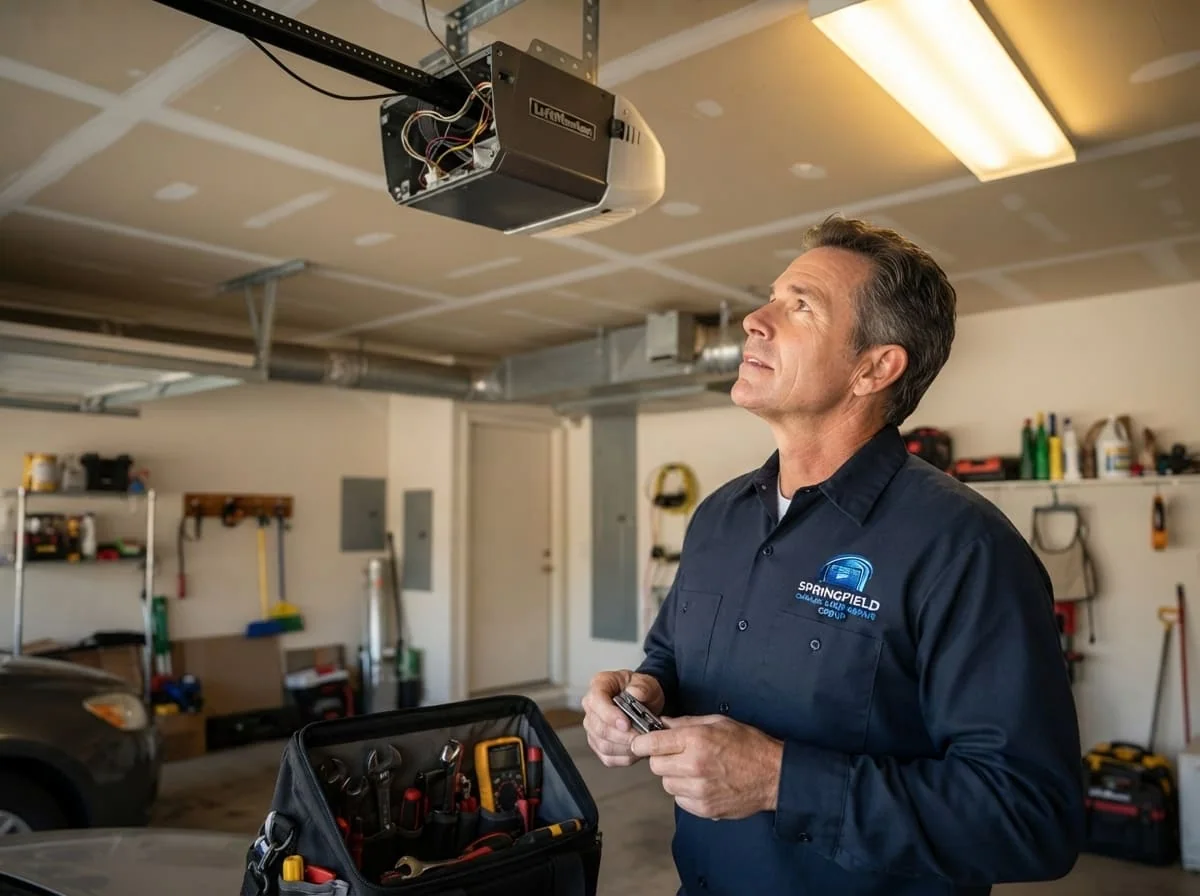
Springfield Garage Door Repair Group has been diagnosing garage door problems, including the kind that show up as noise rather than an obvious failure, since 2013. Grant Callahan's background working on heavier-cycle commercial and government overhead doors before starting this company means our technicians are used to tracing sound and vibration back to their actual mechanical cause rather than replacing parts by guesswork.
We provide upfront, honest pricing with a free quote before any work begins, and our technicians are insured and background-checked. We serve Springfield and the surrounding suburbs, including Chatham, Rochester, Sherman, Riverton, Jerome, Leland Grove, Southern View, New Berlin, and Auburn.
What to Expect When You Call
Schedule a Visit
Call our Springfield office or request an appointment, and we'll schedule a technician with same-day appointments where possible.
On-Site Diagnosis
Your technician runs the door through a full cycle, checking rollers, hinges, tracks, springs, and the opener to find exactly where the noise originates.
Upfront Quote
You get a clear explanation of what's causing the noise and an honest price before any repair work begins.
Repair and Retest
We complete the repair, then run the door again to confirm it operates quietly and smoothly before we leave.
Noisy Garage Door Repair in Springfield, IL FAQs
How much does it cost to fix a noisy garage door?
Cost depends on which part needs attention, worn rollers, a bent track, and loose hardware each involve different work. Springfield Garage Door Repair Group provides a free, upfront quote once a technician has diagnosed the actual cause, so you know the price before any work begins.
Can I lubricate my garage door myself to stop the noise?
You can safely lubricate hinges and rollers yourself with a garage-door-specific lubricant, which often helps with a mild squeak. It won't fix a bent track, worn rollers, or loose hardware, and working near a torsion spring under tension is best left to a trained technician.
Is a noisy garage door dangerous?
It can be. A loud bang followed by the door refusing to move often signals a broken spring, and continuing to run a door with worn rollers, loose hardware, or a shifted track raises the risk of the door binding, jumping the track, or dropping unexpectedly.
How long does it take to fix a noisy garage door?
Many noise repairs, such as replacing rollers or tightening hardware, are completed in a single visit. More involved issues, like a bent track or a full roller replacement, may take longer depending on what the diagnosis finds.
Why is my garage door louder in the winter?
Cold weather causes metal tracks to contract slightly, thickens standard lubricant, and makes aging nylon rollers more brittle, all of which tend to make an already-noisy door sound worse once temperatures drop.
Will spray lubricant fix a squeaky garage door?
A general-purpose spray can quiet a squeak briefly, but many attract dust and grit that packs into rollers and hinges and can make the wear worse over time. A lubricant made for garage door hardware, applied to the right points, holds up better.
Does a noisy garage door always mean the opener needs replacing?
No. Most noise complaints come down to rollers, hinges, track alignment, or hardware rather than the opener itself. A technician can tell you honestly whether the opener is involved after running the door and listening to where the sound originates.
Need Noisy Garage Door Repair in Springfield, IL?
Springfield Garage Door Repair Group is ready to help — call now for a free, upfront quote.