
Garage Door Installation in Springfield, IL
A new garage door done right the first time, sized and balanced to your home's opening and Springfield's weather, not just bolted on and left.
- Locally owned since 2013
- Insured, background-checked techs
- Free upfront quotes
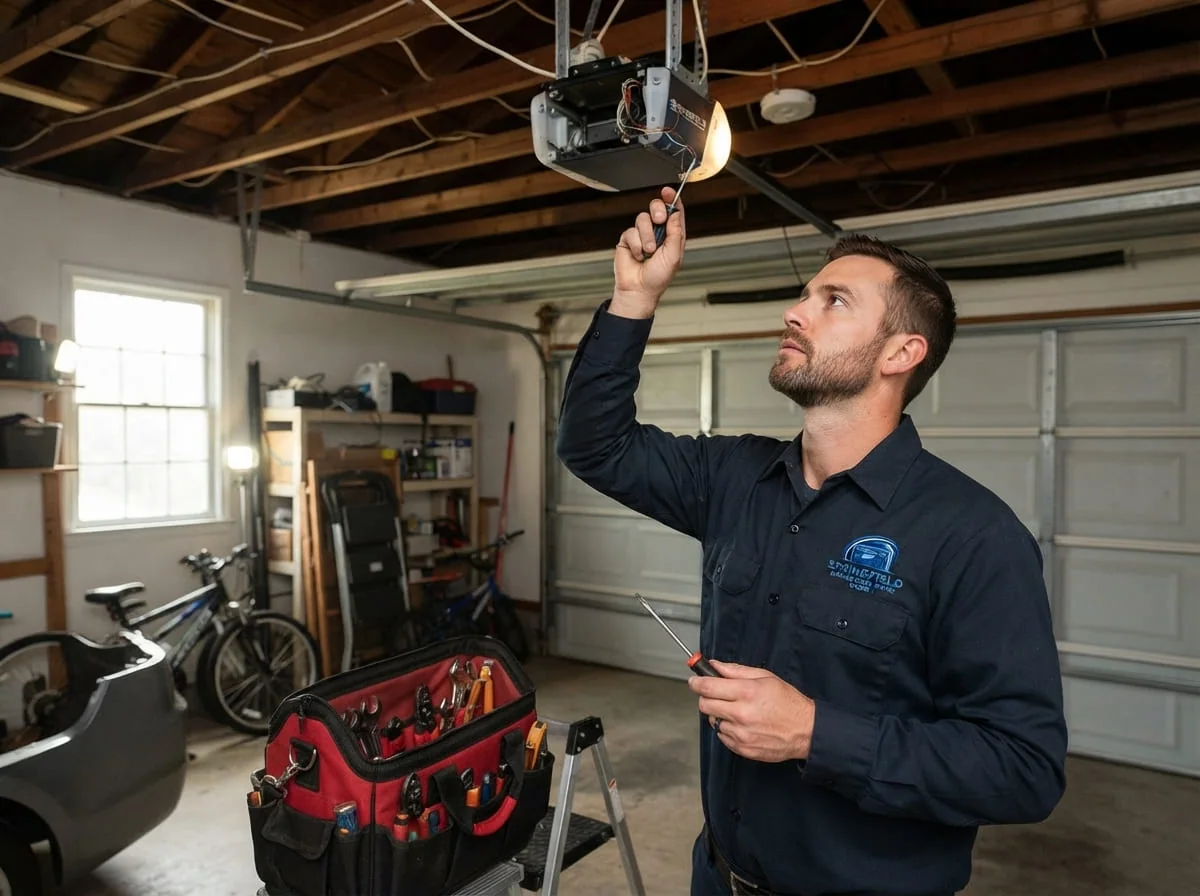
There's a point where repairing a garage door stops making sense: the panels are rusted through, the springs are decades past their cycle life, or the opener is straining against hardware that should have been replaced years ago. When that happens, Springfield Garage Door Repair Group installs the new door, from a single Victorian-era carriage house in Enos Park to a newer two-car opening out toward Koke Mill or Chatham.
A full installation is more than hanging a new set of panels. It means inspecting the opening itself for square and level, setting new track so it runs true, and selecting torsion springs rated for the actual weight and daily cycle count of the door going up, not a generic stand-in. Get that wrong and the door will bind, sag, or blow a spring again within a year or two, no matter how good the panels look.
Grant Callahan founded this company in 2013 after a decade spent maintaining heavy overhead doors on state government buildings around the Capitol complex, and that background shapes how installations are handled here: measure twice, size the hardware to the door, and explain the reasoning to the homeowner instead of just doing the work. Every installation starts with a free, no-obligation quote and an honest conversation about what your specific opening needs.
Signs It's Time for a New Door, Not Another Repair
Some problems are worth fixing. Others are a sign the door itself has reached the end of its useful life. Springfield's older neighborhoods, where garages were often added or rebuilt decades after the original house went up, tend to show these signs earlier than newer construction farther out toward Chatham or Rochester.
- Rust-through or delamination along the bottom panels, especially on doors that sit low to grade
- Visible warping or bowing after repeated humid summers, so the door no longer seats evenly against the weatherstrip
- An opener that strains, grinds, or reverses on its own because the door has gotten heavier or more misaligned than the motor was ever meant to handle
- Spring failures that keep recurring within a year or two of the last repair, which usually points to a door and track system nearing the end of its cycle life rather than one bad spring
- A steady rise in winter heating costs traceable to an uninsulated or poorly sealed door on an attached garage
If more than one of these applies, a technician can walk the opening with you and give a straight answer on whether repair still makes sense or whether installation is the better long-term move.
What a Professional Installation Actually Involves
Removing the old door is the easy part. The work that determines whether a new door lasts happens underneath it: checking that the framing is square and structurally sound, setting new track so it runs plumb on both sides, and torque-testing the header and jambs before anything new goes up.
Spring selection matters more than most homeowners expect. Torsion springs are built and rated around cycle life, tied directly to the finished weight of the door, and undersizing them to save a step is one of the most common reasons a brand-new door starts giving trouble within its first year. Getting that sizing right the first time, and setting proper tension once the door is hung, is a large part of what separates a clean installation from one that will be back on the schedule for a service call within twelve months.
Sizing, Insulation, and Hardware for Springfield's Climate
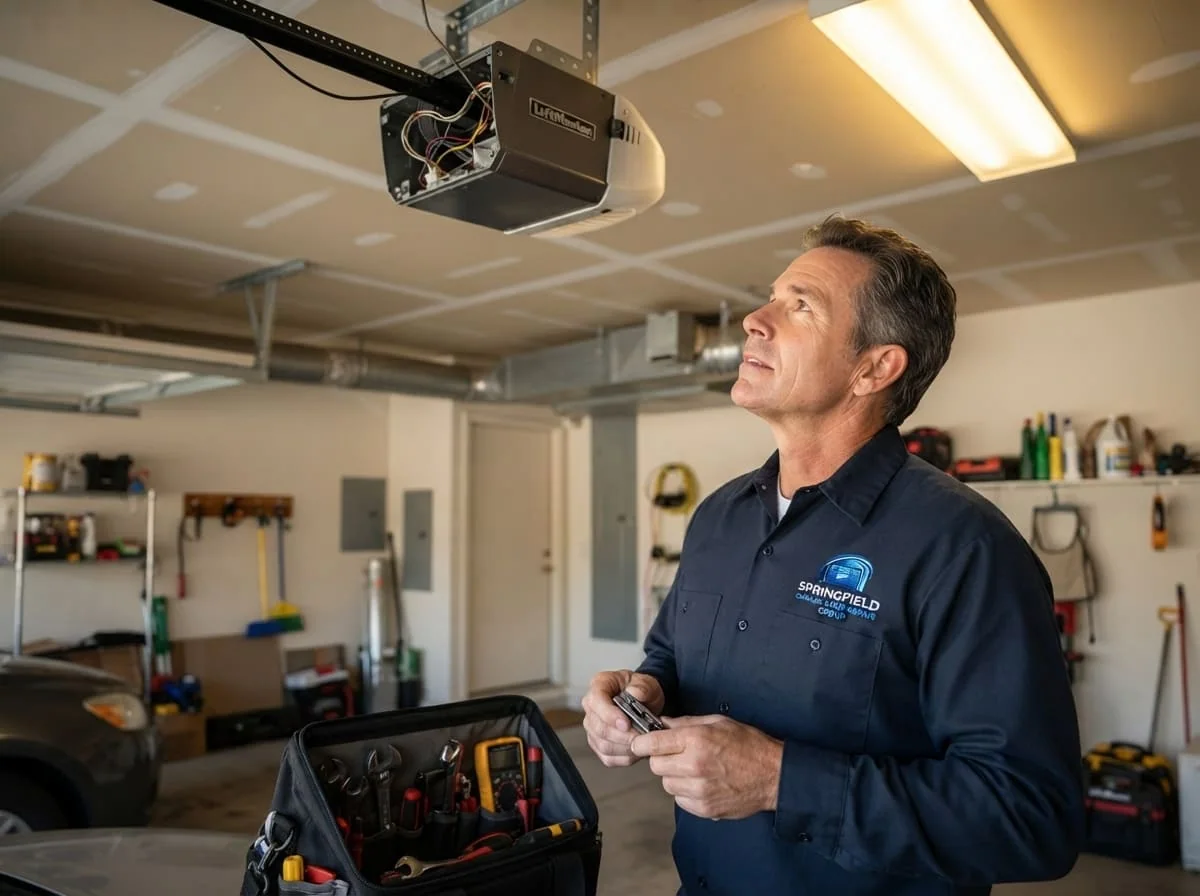
Most single-car openings run 8 or 9 feet wide; most double-car openings run 16 feet. That said, plenty of Springfield homes, particularly older ones in Enos Park or Leland Grove's mid-century stock, have openings that were framed by hand and don't match either standard exactly, so measuring the actual opening always comes before ordering anything.
Central Illinois winters, with January highs averaging in the low 30s and lows in the high teens, are hard on garage door hardware. Cold temperatures cause torsion springs to contract and lose working tension faster, make nylon rollers more brittle, and thicken opener lubricant enough to add drag on the whole system. An insulated door core helps buffer the garage itself against those swings, which eases wear on the spring and track system over time and keeps an attached garage from acting as a cold sink against the rest of the house. It's worth walking through the insulation options that fit your budget and how the garage is used before deciding.
Why DIY Installation Is Genuinely Dangerous
A wound torsion spring stores enough force to cause serious injury, and that force is exactly what a homeowner is handling when attempting to hang or tension a door without the right tools and training. It's the single biggest reason garage door installation, unlike a lot of home projects, isn't a reasonable weekend DIY job for most people, and it's a point the U.S. Consumer Product Safety Commission has documented repeatedly in garage door injury data.
Beyond the spring itself, a door that's out of square or improperly tensioned will fight the opener, wear its rollers and cables faster, and in some cases come off the track entirely. Getting it right the first time is safer and, in the long run, cheaper than fixing the consequences of a rushed installation.
Springfield Weather and Long-Term Installation Quality
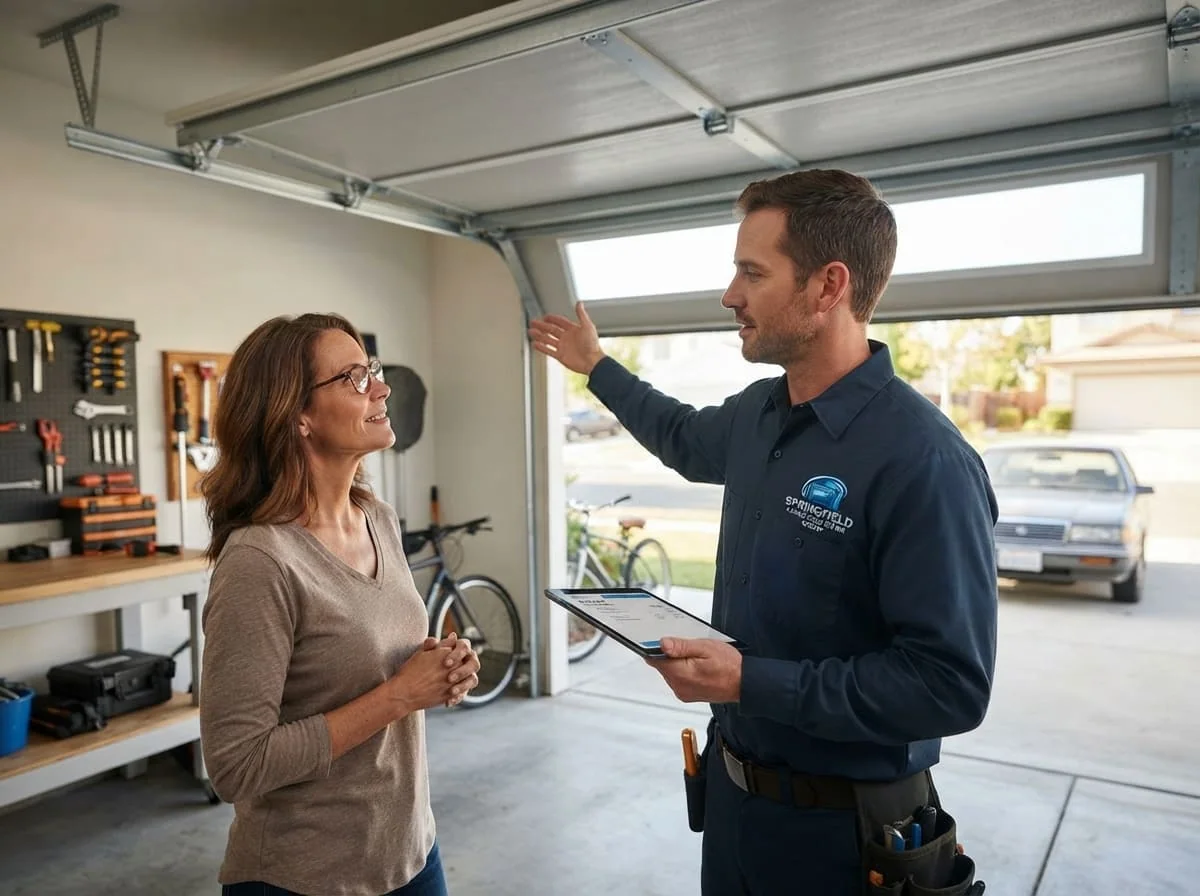
A garage door installed carelessly tends to show it first when the weather turns. Cold snaps make torsion springs contract further and can cause metal track to bind slightly as it contracts, which is far more noticeable on a door that wasn't set plumb to begin with. Older Enos Park and downtown-adjacent homes with wood-framed openings can also shift slightly with seasonal humidity, which is another reason a technician checks the frame itself, not just the door, before installation.
None of this means a new door needs constant attention. It means the initial setup, track alignment, spring tension, and weatherseal fit, has to account for how the opening will move through a full Springfield year, not just how it looks on installation day.
Why Springfield Homeowners Choose Springfield Garage Door Repair Group
This is a locally owned and operated company, not a national chain working through a call center. Grant Callahan has been doing this work in Springfield since 2013, and the crew he's built diagnoses before quoting on every job, residential or otherwise, the same standard he learned maintaining heavier commercial and institutional doors earlier in his career.
Every technician is insured and background-checked, pricing is explained upfront before any work starts, and installations come with workmanship-backed follow-up if something isn't right. Same-day appointments are available where scheduling allows, and after-hours calls are returned first thing the next business day.
What to Expect When You Call
Free In-Home Evaluation
A technician measures the opening, checks the framing and track condition, and talks through door and hardware options with you.
Upfront Quote and Door Selection
You get a clear, written quote before any work begins, covering the door, hardware, and labor involved.
Old Door Removal and Opening Prep
The existing door, track, and springs are removed and the opening is checked for square, level, and structural soundness.
New Door, Track, and Spring Installation
New track is set plumb, panels are hung, and torsion springs are sized and tensioned to the finished weight of the door.
Balancing and Final Walkthrough
The technician balances the door, tests the opener connection if applicable, and walks you through basic operation and care.
Garage Door Installation in Springfield, IL FAQs
How much does a new garage door installation cost?
Cost depends on door size, material, insulation, and the hardware the opening needs, so it varies from job to job. Springfield Garage Door Repair Group provides a free, no-obligation quote before any work begins so you know the full scope upfront.
How long does a garage door installation take?
Most single-door installations on a standard opening are completed in one visit. Jobs that involve reframing the opening or repairing structural damage first take longer.
Can I install a new garage door myself?
It isn't recommended. Torsion springs hold enough tension to cause serious injury if mishandled, and a door that isn't set square or properly tensioned tends to fail its hardware early.
Do I need a permit to replace my garage door in Springfield?
Swapping an existing door for a new one on the same opening typically doesn't require a separate permit, but work that changes structural framing may. It's worth confirming the specifics with the City of Springfield before scheduling.
What size garage door do I need?
Most single-car openings are 8 or 9 feet wide and most double-car openings are 16 feet wide, though older Springfield homes sometimes have nonstandard openings. A technician will measure your actual opening before recommending a size.
Should I get an insulated garage door for a Springfield home?
Given the area's cold winters and humid summers, an insulated door helps stabilize garage temperature and can reduce strain on springs and rollers over time. It's a good option to weigh during your free quote, especially for an attached garage.
What happens to my old garage door opener when I install a new door?
An opener in good working condition can often be reused if it's compatible with the new door's weight and track setup. If it isn't a good match, we can talk through opener installation as a separate part of the job.
Need Garage Door Installation in Springfield, IL?
Springfield Garage Door Repair Group is ready to help — call now for a free, upfront quote.