
Insulated Garage Doors and Illinois Winters
R-value only tells part of the story on a garage door. Here's how insulation, sealing, and Springfield's cold winters actually interact, and what to check before assuming a higher number solves the problem.
Why R-Value Gets Misread on a Garage Door
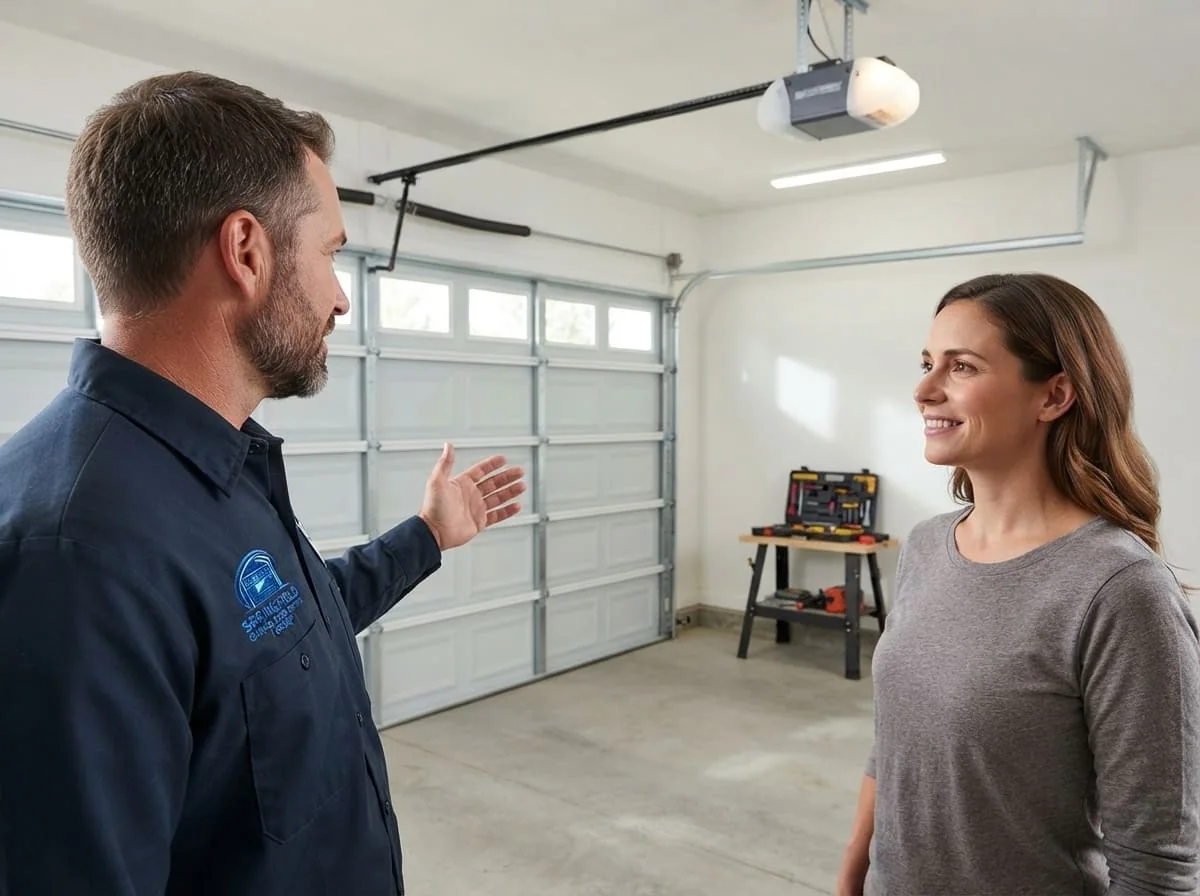
I've been repairing and installing garage doors around Springfield since 2013, and one of the most common misunderstandings I run into is homeowners comparing R-value the same way they'd compare a window energy rating or attic insulation. On a wall or a roof, R-value works reasonably well as a shorthand, because the surface is continuous and the insulation sits inside a cavity that doesn't move once it's installed. A garage door is a different kind of surface. It's usually the largest moving opening in a home's exterior wall, built from several hinged panels riding in metal tracks, and sealed at the edges by weatherstripping rather than the continuous seal a wall gets during framing.
That difference matters more here than it would in a milder climate. Springfield's winters put real, repeated stress on that opening. January's average high sits around 33°F with lows near 18°F, and Sangamon County gets its share of harder cold snaps on top of that average. A door with a high printed R-value can still perform worse in practice than a well-sealed door with a lower one, because heat loss through a garage door happens two separate ways at once: conduction through the panel material itself, and infiltration through the gaps around the edges, the bottom seal, and the seams between panel sections. R-value, as printed on a spec sheet, only describes the first of those.
How the R-Value Number Is Actually Measured
The R-value on a garage door spec sheet typically comes from a lab test of a section of door panel under steady-state conditions, not a full-size door hanging in a real opening with hardware, gaps, and moving parts attached. That's a legitimate way to measure how well an insulating material resists heat flow on its own, but it means the number describes the core material's performance in ideal, controlled conditions rather than how much heat a specific installed door loses in a Springfield garage in February.
That's worth knowing before comparing two doors side by side. A jump from one printed R-value to a noticeably higher one on paper doesn't always translate into a proportional difference once the door is actually installed, especially given how much of a garage door's total heat loss comes from infiltration rather than straight conduction through the panel. It's a genuinely useful number for comparing insulation materials to each other. It's a poor one for judging installed, real-world performance in isolation, which is part of why ENERGY STAR's broader guidance on home energy efficiency stresses looking at the whole assembly and installation, not a single spec in isolation.
Single-Layer, Double-Layer, and Triple-Layer Doors
Garage doors are generally built one of three ways. A single-layer door is bare steel or aluminum with no insulating core at all. It's the lightest option, and it offers essentially no resistance to temperature swings, so the interior surface of the door tracks the outside temperature closely, cold snap for cold snap. A double-layer door adds a layer of insulating foam, usually polystyrene, bonded to the back of the steel skin, with no separate interior surface covering it. That foam layer measurably slows heat transfer compared to bare steel, but the exposed foam back is less durable over time and doesn't fully seal off the internal cavity of the panel.
A triple-layer door sandwiches insulating foam, often polyurethane, between an exterior steel skin and a separate interior steel or vinyl-backed skin. Polyurethane foam expands during manufacturing and bonds to both skins at once, which stiffens the whole panel and closes off internal air gaps that a double-layer design leaves exposed. That combination, a sealed foam core plus a rigid bonded assembly, is why triple-layer doors reliably test at higher R-values than double-layer doors of similar thickness. It's also why they tend to run quieter and resist denting a little better, independent of the insulation question entirely.
What Insulation Actually Changes Inside the Garage
An insulated door changes more than comfort. Springfield's cold snaps affect garage door hardware directly. Torsion springs contract in cold weather, which increases tension on a spring that may already be near the end of its rated cycle life, and cold makes fatigued steel more likely to let go outright rather than wearing down gradually. Track metal contracts too, which can bind rollers that have gotten slightly out of alignment, and nylon rollers get more brittle as temperatures drop. Opener lubricant thickens in the cold as well, which is part of why openers sometimes seem to labor a little more on the coldest mornings of the year.
An insulated door doesn't eliminate any of that, since the outside face of the door still takes the brunt of the cold either way. What it changes is the temperature swing the hardware and the space behind the door actually experience, and it keeps the interior surface from sweating when warm, humid air inside the garage meets a cold steel surface. That surface condensation is a common, underrated source of hardware rust on doors mounted with steel hinges and tracks, and it shows up more on bare, uninsulated panels than on insulated ones.

The Attached-Garage Effect
For homes with an attached garage, common in newer construction on the west side of Springfield around Koke Mill, the garage door isn't just a garage feature. It's effectively part of the thermal envelope of the house. A bare, single-layer door on an attached garage means that wall of the home, and often a bedroom, laundry room, or bonus room built directly above or beside the garage, sits next to a large uninsulated surface for several months of the year. Homeowners in that situation often notice a floor above the garage that stays colder than the rest of the house, or a laundry room wall that's uncomfortable to lean against in January.
Older Springfield neighborhoods like Enos Park mostly predate attached garages as a standard feature, so this effect is less common there. It's a real, measurable factor in newer subdivisions, and it's compounded for homes near Lake Springfield, where wind off the water adds to heat loss on an exposed north- or east-facing door. An insulated door on an attached garage does more thermal work for the house as a whole than the identical door would on a detached garage used only for parking and storage.
Insulation Doesn't Work Alone
None of this performs the way it's supposed to if the door isn't sealed properly, and this is where a lot of the real-world gap between two similarly rated doors actually comes from. Weatherstripping along both sides and the top of the door, a bottom seal or astragal that compresses evenly against the floor, and tight seams between panel sections all control air infiltration, which is often a bigger contributor to a cold garage than the R-value of the panel material by itself. A worn, cracked, or improperly fitted bottom seal lets in a visible strip of daylight and a steady stream of cold air under an otherwise well-insulated door.
- Weatherstripping along the top and sides that's cracked, flattened, or pulling away from its track
- A bottom seal or astragal that no longer compresses evenly against an uneven or settled concrete apron
- Gaps at the corners where side weatherstripping meets the bottom seal
- Panel seams that no longer close tightly due to worn rollers or a door slightly out of alignment
An older double-layer door with fresh, properly fitted weatherstripping can sometimes hold its own against a newer triple-layer door whose bottom seal has been dragging on a cracked concrete apron for a few winters. Before assuming a full replacement is the only path to a warmer garage, it's worth having the seals and weatherstripping actually inspected, since that's often a simpler and less involved fix.
Reading a Spec Sheet Without Getting Misled
When comparing printed R-values between doors, a few questions cut through most of the confusion. Ask whether the number reflects the insulating core alone or the door as a complete assembly, since manufacturers test both ways and the two numbers aren't directly comparable. Ask what thickness of foam produced that number, since two doors using the same foam type but different core thickness will perform differently even with similar-sounding marketing language. And ask how the door's construction handles the edges and seams, not just the flat center of a panel, since that's where a meaningful share of real-world heat loss actually happens.
A straightforward, in-person comparison during a quote is more useful than reading two spec sheets side by side, because it accounts for the actual opening, the actual exposure of that wall of the house, and the actual condition of the tracks and seals already in place, not just a lab number from a controlled test.
Signs Your Current Door Is Underperforming This Winter
A handful of signs tend to show up in garages losing more heat than they should, whether the cause is an uninsulated door, failing seals, or both at once:
- Frost or condensation forming on the inside face of the door panel on cold mornings
- Visible daylight along the bottom seal or between panel sections when the door is fully closed
- A steady cold draft felt near the door even with it closed
- A room adjacent to or above the garage that stays noticeably colder than the rest of the house
- An opener that seems to strain more than usual on the coldest mornings, beyond what's typical for cold-thickened lubricant
- Rust developing on hinges, track hardware, or the bottom bracket, often a sign of repeated surface condensation
Any one of these is worth a look on its own. A door showing several of them at the same time is a reasonable candidate for a closer inspection before another Illinois winter sets in.
What to Weigh Before Upgrading
The right call depends more on how the garage actually gets used and how it connects to the rest of the house than on chasing the highest number on a spec sheet. A detached garage used strictly for parking and storage has a different case for insulation than an attached garage with living space nearby, or a garage that doubles as a workshop where someone actually spends time in the winter months. Exposure matters too. A door facing wind off Lake Springfield or across an open subdivision lot loses more heat than a similar door tucked behind mature trees, which is more common in older, established parts of the city.
It's also worth having the existing door and its seals actually inspected before assuming a full replacement is the only option, since sometimes the more sensible fix is new weatherstripping and a bottom seal rather than a new door entirely. In my experience, that inspection is the part homeowners skip, and it's the part that actually tells you which fix fits your specific garage. Springfield Garage Door Repair Group looks at the door, the opening, and how the garage gets used, then provides a free, upfront quote based on what actually makes sense for that house, rather than defaulting to the most expensive option.

Grant Callahan
Owner and lead technician at Springfield Garage Door Repair Group, serving Springfield, IL since 2013.
FAQs
Does an insulated garage door actually make a difference in a Springfield winter?
Yes, though how much depends on whether the garage is attached to the house, how it's used, and how well the door is sealed. Insulation slows heat transfer through the panel itself, but a poorly sealed door will still lose significant heat around its edges no matter how the panel is rated.
What R-value should I look for in this climate?
There's no single number that's automatically right for every home. A higher R-value generally matters more on an attached garage with living space nearby than on a detached garage used only for parking, and whether the number reflects the whole door assembly or just the insulating core matters as much as the number itself. We walk through the tradeoffs for your specific garage during a free quote.
Can I add insulation to my existing garage door instead of replacing it?
In some cases, yes. Retrofitting rigid foam panels into the back of an existing steel door section is possible on some door styles, though it works better on some panel designs than others and doesn't address weatherstripping or seals, which are often the bigger factor in how cold a garage actually feels.
Will a new insulated door stop my garage from freezing?
An insulated door reduces heat loss and slows temperature swings, but it doesn't heat the garage on its own. A garage without any heat source will still get cold in a Sangamon County winter. Insulation changes how much colder the interior surface gets relative to the outside temperature and how quickly it responds to a cold snap, not whether it gets cold at all.
Does a heavier, insulated door put more strain on the opener or springs?
An insulated door is somewhat heavier than a bare single-layer door, which is why it matters that the opener and spring system are matched to the door's actual weight. We check this as part of any installation rather than assuming an existing opener and spring set will handle it without adjustment.
How much does an insulated garage door cost?
Cost depends on the door's size, insulation layer count and material, and whether the opener or spring system needs adjustment to support the added weight. Springfield Garage Door Repair Group provides a free, upfront quote after looking at your specific garage and opening, before any work begins.
Have a Garage Door Problem Right Now?
Skip the guesswork — call Springfield Garage Door Repair Group for a fast, honest diagnosis.