
Repair or Replace a Damaged Panel?
A dent, crack, or rust hole in one panel doesn't automatically mean a new door. Here's how to figure out whether a single-panel repair or a full replacement is the right call.

How Garage Door Panels Actually Get Damaged
Most panel damage we see in Springfield falls into a handful of predictable categories, and knowing which one you're dealing with is the first step toward deciding what to do about it. A car backing out a little too fast, a bike or lawnmower handle catching the bottom edge, a basketball hoop mishap — these produce a dent or a crack concentrated in one section, usually the bottom or second-from-bottom panel. Hail is the other common culprit around here; central Illinois gets its share of spring and summer storm cells strong enough to pit or dent steel panels across an entire face of the door, not just one spot.
Then there's the slower kind of damage: rust and rot. Bottom panels sit closest to the slab, closest to snowmelt, road salt tracked in off the tires, and sprinkler overspray. On older wood-composite doors especially, we'll find a bottom panel that's soft or delaminating years before the rest of the door shows any wear at all. That distinction — sudden impact damage versus years of moisture exposure — changes the calculus, because a rotted panel is often a symptom of a bigger moisture problem at the slab or weatherstripping, not just a cosmetic issue.
Why Sectional Construction Matters Here
Almost every residential garage door installed in the last few decades is a sectional door: several individual horizontal panels hinged together and riding in vertical tracks on rollers, connected to a torsion or extension spring system that does the heavy lifting. That design is exactly why panel-only repair is usually possible at all. Because each section is a discrete unit bolted to its neighbors through the hinges, a technician can often unbolt a single damaged section, disconnect it from the hinges and rollers, and swap in a replacement section without touching the rest of the door or the opener.
This is different from older one-piece tilt-up doors, where the entire door is a single slab and localized damage generally does mean replacing the whole thing. If you're not sure which type you have, a sectional door will show visible horizontal seams every couple of feet across the face; a one-piece door won't. Most of what we install and repair in Springfield today is sectional, which is good news for anyone hoping to avoid replacing an otherwise sound door over one bad panel.
When a Single-Panel Repair Makes Sense
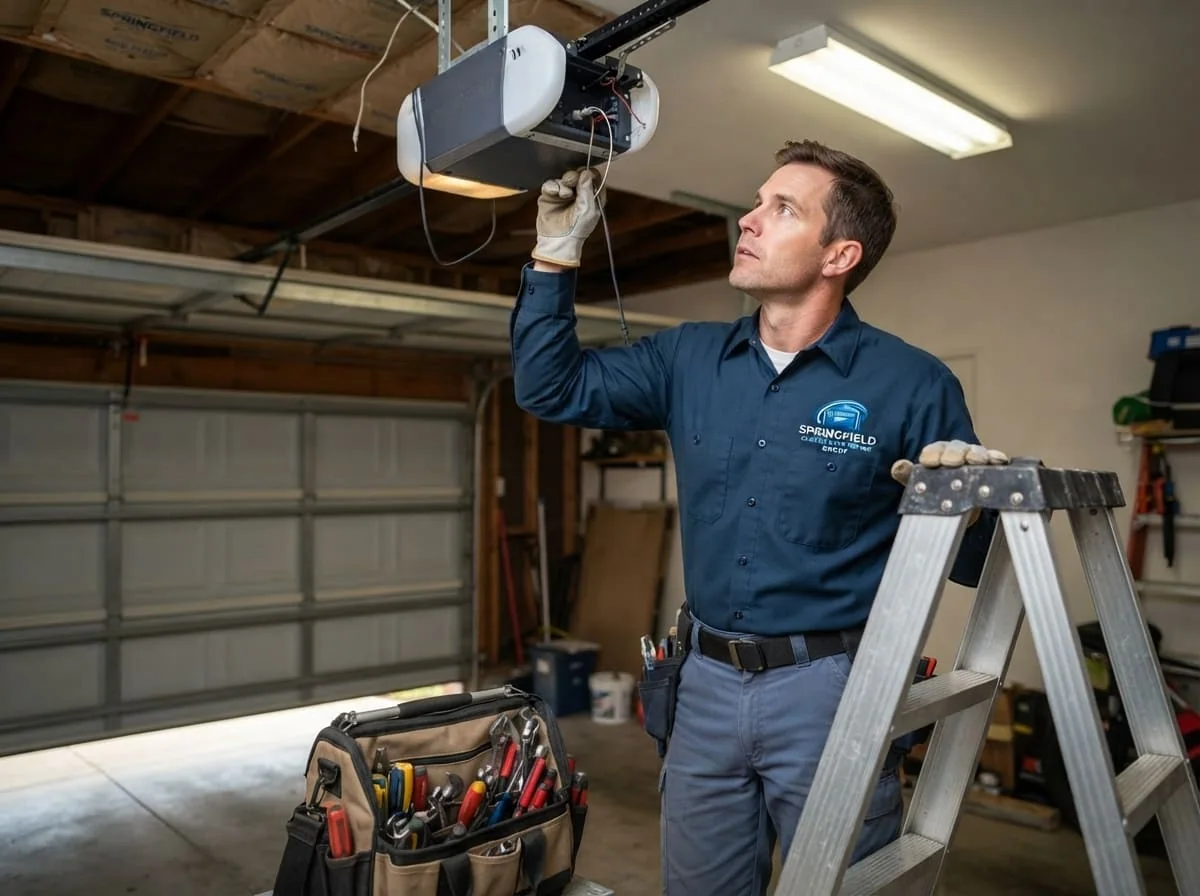
A panel-only repair is usually the right call when a few things line up. First, the damage is contained to one, or at most two, adjacent sections — not spread across the whole door. Second, the rest of the door is structurally sound: tracks are straight, rollers turn freely, and the door was opening and closing properly before the damage happened. Third, a matching or acceptably close replacement panel is realistically available for that door's profile, given its age and design. Doors that are a few years old, still in production, and otherwise in good shape are the best candidates.
There's also a cosmetic tolerance question worth being upfront about. Steel and paint finishes weather over time, and a brand-new panel dropped next to older, sun-faded neighbors can be visibly different in sheen or shade even when the profile matches perfectly. For a bottom panel that's mostly hidden behind cars and landscaping, that's rarely a dealbreaker. For a panel at eye level on a door that faces the street, it's worth deciding in advance how much of a mismatch you're willing to live with, or whether it's worth repainting the full door to even things out.
- Damage limited to one or two sections
- Tracks, rollers, and hinges elsewhere still functioning normally
- Door was balanced and operating correctly before the incident
- A comparable replacement panel is realistically obtainable
- Cosmetic variation between old and new panels is acceptable to you
When Full Replacement Is the Better Call
Full door replacement starts to make more sense once the math stops favoring a patch job. If two or more panels are damaged, or if the damage runs the length of the door from a hail event or a bent track pulling on multiple sections, you're often looking at a repair bill that approaches what a new door costs anyway. Age matters too. A door that's already well past the midpoint of its expected service life, with worn rollers, a tired opener, and a spring that's due, is a poor candidate for a single new panel bolted onto an otherwise aging assembly — you'd be investing in a part while the rest of the system is close behind it.
Replacement also becomes the more honest recommendation when the discontinued-panel problem shows up. Door styles and panel profiles change over the years, and a door that's ten or fifteen years old may simply not have a matching replacement section available anymore, at any price. In that situation a technician isn't choosing full replacement to run up a bill; there's genuinely no panel-only path left. Finally, if you've been considering an upgrade anyway — better insulation for Illinois winters, a different window layout, a quieter operating system — a damaged panel is often the moment that makes replacement worth doing now rather than deferring it again.
What Actually Drives the Cost
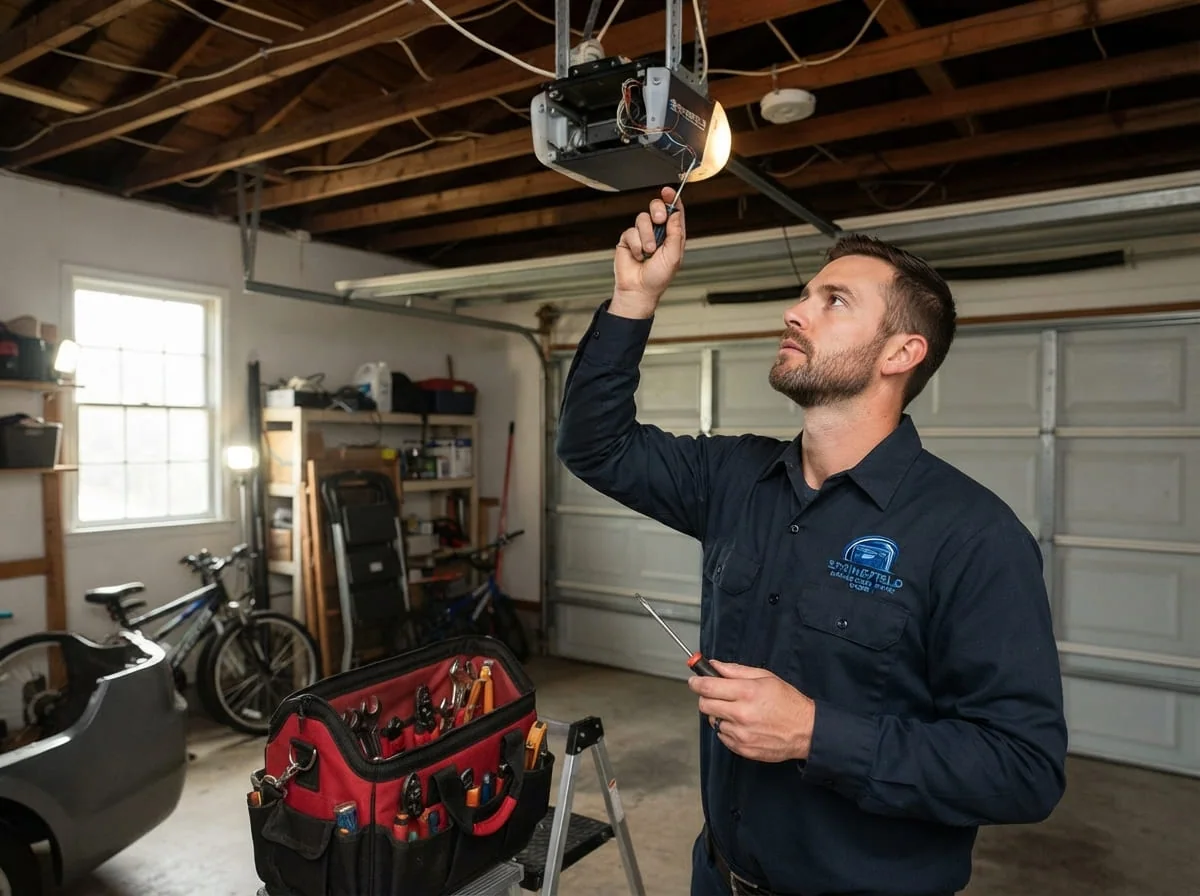
We won't give you a number here, and you should be skeptical of anyone who quotes a firm price over the phone before seeing the door in person. What we can tell you honestly is what moves the price up or down: how many sections need replacing, whether the door's specific panel profile is still in production or has to be sourced as a harder-to-find match, whether the track, rollers, or spring also need attention because of the same impact, insulation type, and the door's overall dimensions. A single bottom panel on a standard-width door is a much smaller job than resectioning a double-wide door after a storm.
Springfield Garage Door Repair Group provides free upfront quotes before any work begins, specifically because panel damage varies this much from house to house. A technician who looks at the actual door, actual damage, and actual hardware underneath it can tell you plainly whether you're looking at a panel swap or a full replacement, and why, before you commit to either.
The Safety Angle Most Homeowners Miss
A dented panel looks like a cosmetic problem, and sometimes it is. But a garage door only works safely when its full weight is evenly distributed and balanced against the spring system, and when every section tracks straight through the rollers. Impact damage severe enough to bend a section can also tweak the track alignment behind it, even when the bend isn't visible from the front. A door that's fighting a slightly bent track puts uneven strain on the opener, on the cables, and on the spring — which is exactly the kind of hidden stress that leads to a cable snapping or a spring failing sooner than it should have.
This is where we'd point you to the U.S. Consumer Product Safety Commission's guidance on garage door hazards, which covers exactly this kind of chain reaction: a door that looks fine operating but is quietly out of balance is a common precursor to the springs, cables, or rollers failing under load. If your door has been visibly dented and has also started acting differently since — closing crooked, reversing unexpectedly, or making a new grinding sound — treat that as a signal to have the whole system checked, not just the panel.
Why This Isn't a Great DIY Project
Individual panel replacement sounds simple on paper: unbolt the damaged section, bolt in the new one. In practice, a sectional door is under constant spring tension the moment it's installed, and disconnecting even one section means working around cables and hardware that are storing real mechanical force. Get the sequence wrong, or work on the wrong side of a torsion spring, and the door can shift or drop while hinges and rollers are disconnected. That's a genuinely dangerous moment to improvise through, especially on a door with more than one damaged section where more of the assembly is open at once.
There's also a sourcing and fit problem that's easy to underestimate from the outside. Panel profiles vary by manufacturer, by production year, and sometimes by regional distribution, so ordering the wrong section is a real risk if you're matching from a photo rather than an on-site measurement. We'd rather a homeowner call and ask what a repair like this actually involves than find out halfway through a weekend project that the door won't go back together the way it came apart.
Protecting the Panels You Have Left
If you're repairing rather than replacing, a little attention now extends the life of the panels you're keeping. Keep the bottom weatherstripping in good shape, since a cracked seal lets in the moisture that eventually rots or rusts the bottom panel from the inside edge out. Springfield's freeze-thaw winters are hard on any exterior seal, so it's worth a look each fall. If your driveway slopes toward the garage at all, make sure water isn't pooling against the base of the door after heavy rain. And if a storm rolls through with hail, a quick visual check of the whole door face afterward can catch a dent while it's still a one-panel problem instead of a whole-door one down the road.

Grant Callahan
Owner and lead technician at Springfield Garage Door Repair Group, serving Springfield, IL since 2013.
FAQs
Can I really replace just one panel instead of the whole garage door?
In most cases, yes, if you have a sectional garage door (the kind with visible horizontal seams every couple of feet) and the damage is limited to one or two sections. Each section is bolted to its neighbors through the hinges, so a technician can typically remove just the damaged one and bolt in a replacement without disturbing the rest of the door, as long as a comparable panel is still available for that door's specific profile.
How much does it cost to repair or replace a garage door panel?
It depends on how many sections are damaged, whether the panel profile is still in production or has to be specially sourced, the door's insulation type and width, and whether the track, rollers, or spring were also affected by the same impact. We don't quote prices sight unseen because these variables change the job so much house to house. Springfield Garage Door Repair Group provides a free upfront quote after actually looking at the door, so you know the real scope before agreeing to anything.
Will a replacement panel match the rest of my door?
The profile and dimensions should match closely if the panel is still available for your door's model and era, but color and sheen can differ slightly, especially on an older door where the existing panels have faded from years of sun exposure. For a bottom panel that's mostly out of sight, this rarely matters. For a panel at eye level on a street-facing door, it's worth discussing ahead of time, since some homeowners choose to repaint the full door once a new panel is installed to even out the finish.
Is a dented panel actually dangerous, or just ugly?
It can be both. A visible dent is sometimes purely cosmetic, but an impact hard enough to bend a panel can also throw off the track alignment behind it, which puts uneven strain on the springs and cables even if the door still looks like it's opening and closing normally. If the door has started closing crooked, reversing unexpectedly, or making a new noise since the damage happened, that's worth a full inspection rather than just addressing the dent.
How long does panel repair or replacement take?
A straightforward single-panel swap on a door that's otherwise in good working order is typically a same-visit repair once the correct panel is on hand. Jobs get longer when a panel has to be specially sourced, when multiple sections are involved, or when the same damage affected the track or rollers and those need to be corrected first. We can give you a realistic timeline once we've seen the actual door.
Can I repair a garage door panel myself?
We'd advise against it for anything beyond a purely cosmetic touch-up. A sectional door is held under real spring tension the moment hinges and rollers are disconnected from a panel, and working around that tension without the right approach can let the door shift or drop unexpectedly. Sourcing the correct replacement panel from a photo alone is also a common way to end up with a section that doesn't actually fit.
Have a Garage Door Problem Right Now?
Skip the guesswork — call Springfield Garage Door Repair Group for a fast, honest diagnosis.